Partners WINSA – Laboratorio de Vectores de importancia en Salud Pública (URUGUAY)
Laboratorio de Vectores de importancia en Salud Pública (URUGUAY)
The Laboratory for Vectors of Public Health Importance operates through an agreement between two institutions: the Ministry of Public Health (MSP) and the University of the Republic (UdelaR).
The UdelaR is represented by the Academic Unit of Parasitology and Mycology of the Faculty of Medicine.
The Zoonoses and Vectors Unit, which reports to the Population Health Area of the General Directorate of Health, participates within the MSP.
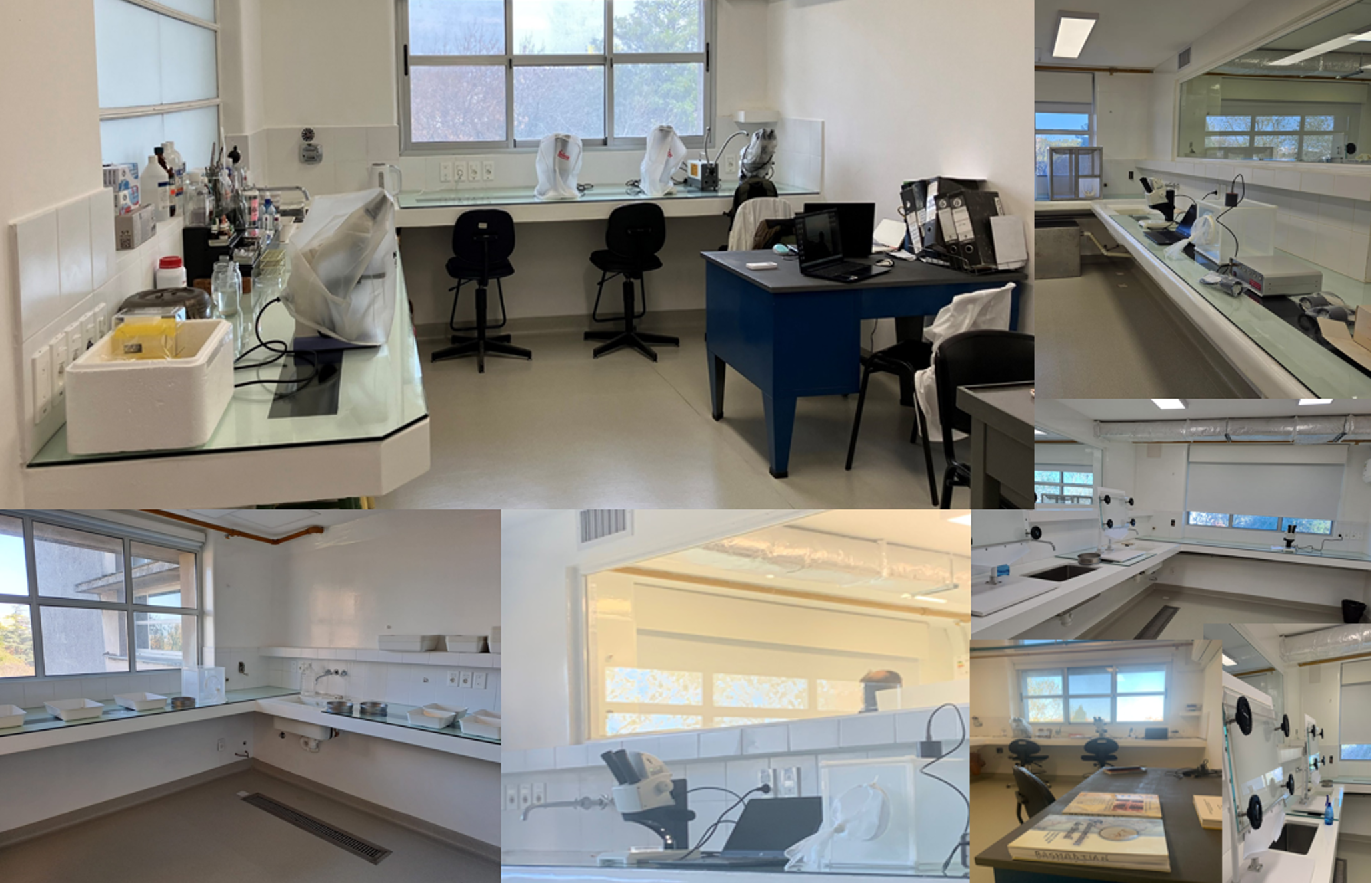
Located at the Udelar Institute of Hygiene, this is a pioneering laboratory in Uruguay dedicated to the research and control of insect vectors of disease.
Opened in June 2023, this laboratory was developed in collaboration with the Ministry of Public Health (MSP), the Pan American Health Organization (PAHO), and the International Atomic Energy Agency (IAEA). It has a 100 m² infrastructure and meets international quality and safety standards.
Its mission is to contribute to improving the health of residents by establishing a national reference center for the prevention, monitoring, and control of vector-borne diseases (VBDs) in our country, with the greatest efficiency in resource management.

Objectives of the lab
Its objectives are:
- To provide continuously updated information to assess the risk of VTE circulation.
- To determine the distribution, abundance, and seasonal fluctuations of vectors of public health importance.
- To establish an A. aegypti breeding facility to implement the sterile insect technique (SIT), an innovative strategy to reduce the transmission of diseases such as dengue, Chikungunya, and Zika.
- To evaluate control interventions.
- To provide material for the development of biological tests.
- To identify insects sent to the Vector Surveillance Laboratory.
- To estimate insecticide resistance in various vector populations.
The laboratory also plays a historically important role in entomological surveillance, identifying and breeding insect species that are vectors of diseases of public health concern. Its work includes the rearing of triatomines (kissing bugs) for Chagas disease diagnosis and the classification of sandflies (phlebotomines) as vectors of leishmaniasis, an emerging disease in the country. Additionally, it actively participates in epidemiological surveillance in collaboration with the MSP, contributing to the monitoring of vectors such as Aedes aegypti and Lutzomyia longipalpis in various regions of Uruguay. Recently, a new line of research has been established to evaluate insecticide resistance in Aedes aegypti populations, both at the molecular and phenotypic levels. This research aims to identify resistance mechanisms that may undermine the effectiveness of vector control programs and to support the design of more sustainable and targeted strategies. Furthermore, the initiative includes the training of specialized human resources, strengthening national capacities in medical entomology and resistance surveillance, within the framework of an integrated public health approach. This laboratory represents a significant advancement in Uruguay’s capacity to address vector-borne diseases, reinforcing research, diagnostics, and the development of innovative control strategies nationwide. As part of our professional activities, we regularly contribute to undergraduate and postgraduate education through the delivery of lectures and courses.

Focal point: Gabriela Willat
Contact: gwillat@msp.gub.uy
ORCID: https://orcid.org/0009-000-6420-5238

Focal point: Yester Basmadjian
Contact: yester@higiene.edu.uy
ORCID: https://orcid.org/0000-0003-2783-1499