Chikungunya resurgence highlights gaps in Aedes surveillance and control in South America
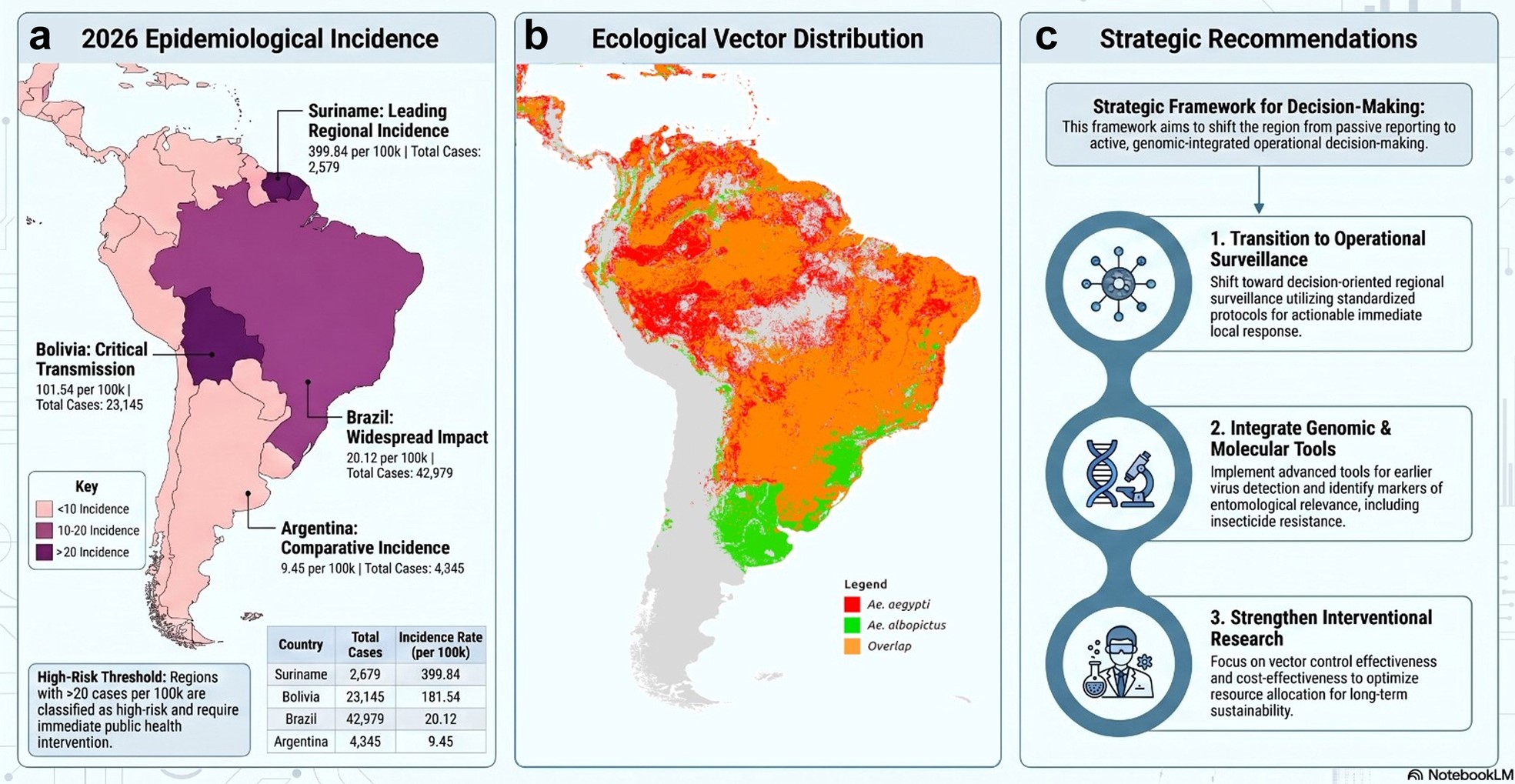
Over the past decade, chikungunya has re-emerged as a major public health concern in the Americas.1 In 2025 alone, more than 313,000 cases and 170 deaths were reported across 18 countries, according to the Pan American Health Organization (PAHO). Transmission continued to expand in 2026, particularly in Suriname, Bolivia, Brazil, and Argentina (Fig. 1). Although promising results have recently been obtained with chikungunya vaccines, several challenges still impede large-scale implementation, including the absence of WHO recommendations, safety concerns in certain populations, manufacturing and supply constraints, and limited data regarding efficacy, long-term protection, and optimal vaccination strategies for endemic areas and high-risk populations.2 In addition, climate and environmental changes are reshaping the genomic diversity and bionomics of Aedes vectors, influencing population dynamics, vector competence, and resistance patterns, and potentially facilitating arbovirus expansion into previously unsuitable areas.3 While PAHO recently issued an epidemiological alert regarding the risk of sustained transmission and large-scale epidemics,4 the current chikungunya situation once again highlights the persistent weaknesses of vector surveillance and control systems in the region, which remain largely reactive rather than proactive.